Hot News
Quick Links

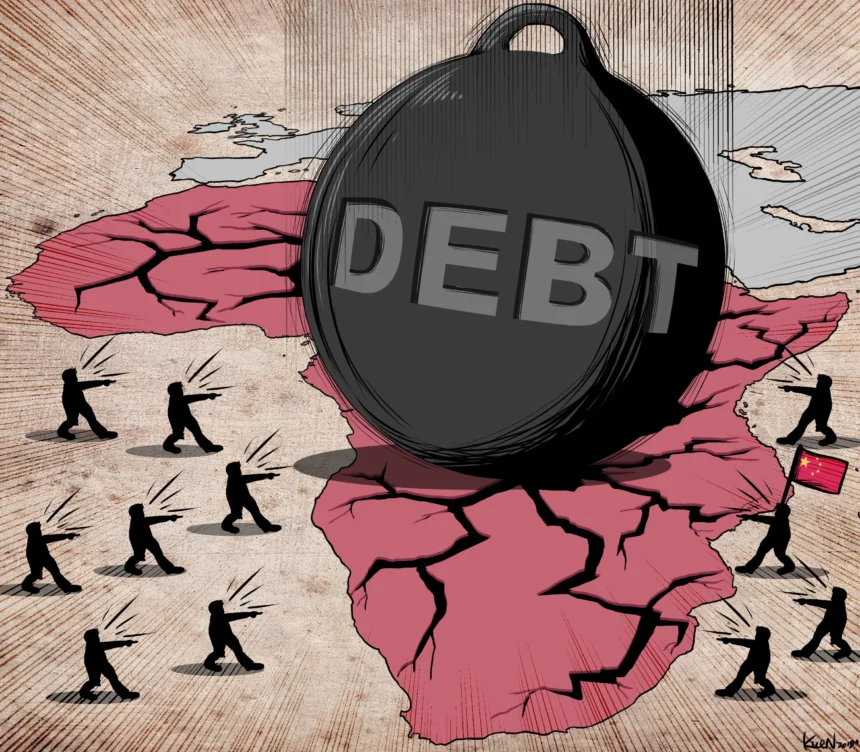
Total external debts as a share of Africa’s export earnings increased from 74.5% in 2010 to 140% in 2022. In 2022, African governments had to allocate about 12% of their revenues to servicing their debt. Between 2019 and 2022, 25 African governments allocated more resources to servicing their total debts than to the health of their citizens. And in late…


Lauren Johnston, South African Institute of International Affairs China’s Belt and Road Initiative, which now includes 44 African countries, got under way 10 years ago. President Xi Jinping launched it in 2013 with a first speech in Kazakhstan and a second one in Indonesia. The initiative is something of a trial-by-doing development policy enigma: it keeps China watchers chasing Xi’s…

By David Whitehouse/The Africa Report China is in pole position to negotiate minerals access with African governments keen to add more value locally. China has built a long head start over the West in securing access to Africa’s critical minerals. That leaves North America and Europe in a weak position to develop new value chains, with African governments insisting on…


George Weah, a former soccer star who has been president since 2018,…
Several traceability systems have been introduced in the last six months, spurred…
Kazangula Bridge – Botswana / Zambia border
The International Monetary Fund (IMF) logo is seen outside the headquarters building…
Operating conditions for most African banks are likely to be similar in…
Bamidele Olajide, University of Lagos African countries entered the recent COP28 negotiations…
Elizaveta Kovaleva, University of the Western Cape The Great Sand Sea Desert…
Edward Webster, University of the Witwatersrand From US car factories to public…
By Samir Hamladji/The Africa Report Recruitment, staff management…Between the advent of new professions…


UNCTAD’s Economic Development in Africa Report 2023 examines the continent’s potential to become a major participant in global supply chains for high-technology sectors like automobiles, mobile telephones, renewable energy and health care.Recent disruptions due to trade turbulence, economic uncertainty, a global pandemic and geopolitical events have compelled manufacturers worldwide to diversify their production locations and geographical footprint.This presents opportunities for African governments and businesses to position the continent as the new destination for global supply chains.It has an abundance of critical minerals needed for high-tech and green products and is home to a young, tech-savvy population, an adaptable workforce and a burgeoning middle class.The African Continental Free Trade Area also offers advantages by easing access to regional markets and strengthening production chains across the continent, helping domestic industries become more prepared for the global arena.The report recommends policy actions to overcome supply chain hurdles African countries face, including poor logistics, low levels of technology, fragmented markets, limited capital sources, and weak institutions and regulations.This is Africa's moment to bolster its position in global supply chains, strengthen its emerging industries and create millions of jobs.UNCTAD SECRETARY-GENERAL REBECA GRYNSPANGlobal supply chain diversification: Africa’s comparative advantageWith the world’s youngest and fastest-growing population (about 60% of Africans are under the age of 25), the continent is emerging as a magnet for consumer markets and products, making it an attractive destination for supply chains. Another comparative advantage is Africa's vast reserves of critical minerals – including aluminum, cobalt, copper, lithium and manganese – needed for high-tech and green products like smartphones and solar panels. Expanding energy supply chains into Africa is also an opportunity to accelerate climate action. The continent has at least a fifth of the world’s reserves in a dozen metals critical for the energy transition – including about 19% of those needed for electric cars. As the global push for cleaner energy intensifies, demand for such metals will soar – an electric car, for example, needs about six times more minerals than a traditional vehicle. Besides providing direct access to the raw materials, African economies can help manufacturers shorten and simplify supply chains and cut transportation costs by locally processing the metals into intermediate products, such as batteries or screens. Africa also offers opportunities to green supply chains by tapping the continent’s green hydrogen potential and renewable energy resources, particularly solar. To seize these comparative advantages, African countries need to enhance productivity through technology adoption, improve logistics and leverage trade agreements. Investments in the continent’s infrastructure, including ports, roads and rail, have lagged, contributing to delays that discourage businesses from sourcing products from African countries. Initiatives like the continental Programme for Infrastructure Development in Africa and South-South partnerships such as the Silk Road Economic Belt initiative could help upgrade the region’s infrastructure. UNCTAD calls for1African countries should secure better mining contracts and exploration licences for metals to strengthen domestic industries and enable local firms to design, procure, manufacture and supply the necessary components.2African governments to design industrial policies that prioritize local sourcing and focus on areas such as science and technology, human capital development, infrastructure and capacity-building.3Investment promotion agencies to establish vendor development programs and facilitate linkages between foreign firms and local suppliers.High-tech supply chains:Resetting African economies for mobility and scaleSome African countries, led by South Africa, Morocco, Algeria and Egypt, manufacture automobiles while most (about 84%) supply raw and semi-raw materials. Untapped potential lies in producing non-automotive grade components, such as batteries and lamps, which are less technology-intensive than parts like motors. Opportunities also abound in mobile telephone supply chains. For instance, the Democratic Republic of the Congo, which holds about 46% of the world’s cobalt, is venturing into producing cathode precursors – a main component in batteries. Africa can also harness its potential for solar energy. Egypt, Morocco and South Africa already manufacture solar panels and further prospects exist in assembling solar fields, which require components like ball joints and cables that are used by many industries. However, the continent requires more investment to boost manufacturing. Even with renewable investments in Africa soaring by a yearly average of 96% since 2000, the continent attracts a mere 2% of the global total. The report also highlights the potential in pharmaceutical and medical product supply chains. Africa provides 12% of global exports of vital minerals used by the medical industry. But intra-African trade in the sector remains weak. For instance, South Africa, the world’s leading exporter of titanium and platinum – essential for medical devices – accounts for just 5% of African imports of these metals. The African Continental Free Trade Area could play a pivotal role in facilitating intra-African trade and strengthening regional supply chains in high-tech sectors by cutting tariffs, boosting infrastructure investments and building links between companies and local suppliers. UNCTAD calls for1African governments to develop manufacturing strategies for mobile telephones, renewable energy technologies and medical devices, like those that exist for the automotive and pharmaceutical industries.2International organizations to support African countries to identify their unique potential and niche areas in technology-intensive supply chains.3African countries to strengthen intellectual property rights, legal frameworks and political stability to attract more foreign investment.Optimizing opportunities:Going digital and improving access to financeTo optimize supply chain opportunities, Africa needs to go digital and improve access to supply chain finance. Countries such as Kenya have made notable progress in this realm, with rising rates of digital skills. For high-tech and complex products like medical devices and electrical equipment, technologies such as automation, machine learning, artificial intelligence and blockchain are necessary for production, distribution, logistics and procurement. The use of new technologies and digital solutions also enhances supply chain visibility, responsiveness and compliance with regulations. In Africa, many small and medium-sized enterprises (SMEs) are not part of the global supply chain network due to their limited use of digital technologies. They face challenges such as a lack of skills and funding gaps. African firms can play a larger role in supply chain diversification by integrating vertically or horizontally. Collaboration between large firms and SMEs through mergers…
FIFA president Gianni Infantino hopes the African Football League is here to stay and inspire the world. After attending the competition's opening fixture in Tanzania in October, Infantino was Sunday…